Two years after its initial beta buzz, Zenless Zone Zero has finally launched, and the verdict from players is... mixed, to say the least. As a professional gamer who's been knee-deep in the post-apocalyptic streets of New Eridu since launch day, I can't help but feel a sense of déjà vu. On paper, HoYoverse's latest should have been a slam dunk. It boasts a combat system that's slicker than a fresh coat of paint, a vibrant urban aesthetic that's straight out of your favorite anime, and a roster of characters with more personality than a season finale. Yet, after countless hours, there's this nagging feeling that something crucial is missing, a core piece of the puzzle that prevents the whole experience from truly clicking. It's like having a five-star meal served on a paper plate—the quality is there, but the presentation leaves you scratching your head.

The TV Grid Grind: A Pacing Nightmare 😫
Let's cut to the chase: the single biggest issue plaguing Zenless Zone Zero is its baffling pacing, primarily driven by its overreliance on the television-styled mini-game. Whether you're tackling the main story, side quests, or the roguelike mode, you're constantly being funneled back into this linear grid. You move up, down, left, and right, occasionally solving a simple color-memory puzzle or a box puzzle. Rinse and repeat. It's mind-numbingly slow and repetitive. The real kicker? This monotonous grid-crawling occupies the majority of your playtime, while the game's undeniable crown jewel—its combat—gets relegated to brief, tantalizing interludes. It's utterly absurd. You get a taste of that high-octane action, and just as you're getting into the groove, bam, you're back to pushing a cursor around a static screen. Talk about a buzzkill.
Combat: The Shining Star That's Too Often Hidden ✨
When you do get to fight, oh boy, does Zenless Zone Zero shine. The combat system is an absolute blast, focusing on fluid dashes and quick character swaps that keep you constantly on your toes. It's easy to pick up but has a satisfying depth for those who want to master it. Most importantly, it feels ridiculously cool. The animations are stylish, the impacts feel weighty, and chaining together attacks between your team members is pure gaming serotonin. Those rare, extended combat sequences against waves of enemies are a wistful glimpse of what the game could have been if it had the courage to let its best feature take center stage. Instead, this brilliant action is drip-fed to you, making the return to the TV grid feel even more like a chore.

The Battery Charge Blues: A Step Backwards for Progression 🔋
If the TV grid artificially slows the moment-to-moment gameplay, then the Battery Charge system brings your overall progression to a screeching halt. This is a regressive throwback to the most frustrating aspects of mobile gaming. Main story missions are gated behind this energy currency. Need to farm for equipment or materials? That costs Battery Charge too. Want to do a side quest? You guessed it. You're forced to make daily decisions: do I advance the story or work on upgrading my crew? Once you exhaust your free daily recharge, you can use Film—the same premium currency used for pulling new characters—to get more energy. While not directly for sale at launch, the shared currency creates a nasty temptation. Do you spend your hard-earned Film on pulls for that awesome new character, or on energy so you can actually play the game? It's an annoying layer of friction that makes simply experiencing the story feel like a resource-management puzzle.
A World of Style, Locked Behind a Screen 🏙️
It's a shame because the world HoYoverse has built is genuinely captivating. New Eridu is a visual feast, blending the stylish urban vibes of Persona 5 and Jet Set Radio with a uniquely chill, slice-of-life atmosphere. This isn't your typical grim, depressing apocalypse. The city is the last bastion of humanity after "Hollow" bubbles devastated the planet, but its residents have responded with a vibrant pop-culture obsession. The streets are filled with charming nods to movies, TV, and classic video games.
-
You run a video rental store (a lovely, nostalgic touch).
-
There's a fully functional arcade with games inspired by classics like Snake.
-
The storytelling has evolved, ditching Genshin Impact's fade-to-black text dumps for snappy, interactive comic book strips that fit the aesthetic perfectly.
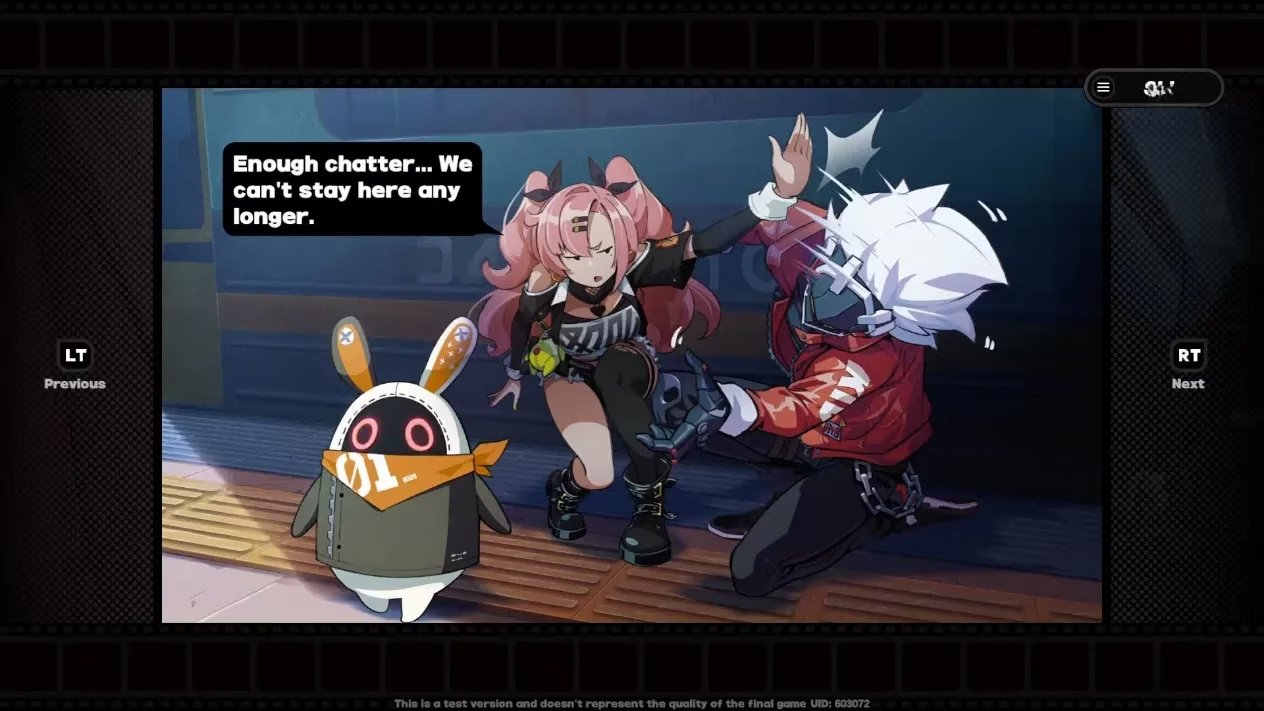
It's all so vibrant and full of personality. But here's the rub: you don't get to spend nearly enough time soaking it in. You're constantly being pulled away into the dull, monochromatic TV grids or the equally bland "Hollow" combat zones. The game's most charming element—its world—feels like a reward you have to earn by enduring its least enjoyable mechanics.
The Bottom Line: A Conflicted Experience 🤔
So, what's the final verdict for a pro gamer in 2026? Zenless Zone Zero is a game of stark contrasts and conflicting design choices.
| The Good 👍 | The Bad 👎 |
|---|---|
| Superb, stylish combat with great depth | Tedious TV grid mini-game dominates playtime |
| Vibrant, unique urban world (New Eridu) | Battery Charge system gates progression |
| Charming cast of characters & great art | Shared Film currency creates frustrating choices |
| Innovative comic-strip storytelling | Hollow areas are visually repetitive |
The core issue is a lack of coherence. HoYoverse clearly put in the work to create an amazing combat system and a world bursting with personality. Why, then, would they relegate these strengths to the background in favor of a monotonous mini-game and a restrictive energy system? If the goal was mobile-friendly design, their own Honkai: Star Rail proved there are better ways. In its current state, enjoying Zenless Zone Zero's many strengths requires a serious tolerance for its glaring weaknesses. It's a game with a ton of heart and style, but one that often gets in its own way. Here's hoping future updates can rebalance this equation, because the potential for something truly special is absolutely there, just waiting to break free from the grid.