Is mobile gaming still just about casual match-three puzzles and gacha mechanics? For years, the divide between mobile and traditional console/PC gaming seemed clear and permanent. Mobile games catered to different audiences with different expectations—quick sessions, touch controls, and often free-to-play models with microtransactions. But what if that distinction is becoming obsolete? A recent showcase of games coming to Apple devices in 2026 suggests we're witnessing a fundamental shift. Major developers like Ubisoft, Capcom, and EA are now bringing full-fledged, console-level experiences directly to iPhones and iPads, blurring the lines between platforms in unprecedented ways.
The Era of Full Console Ports on Mobile
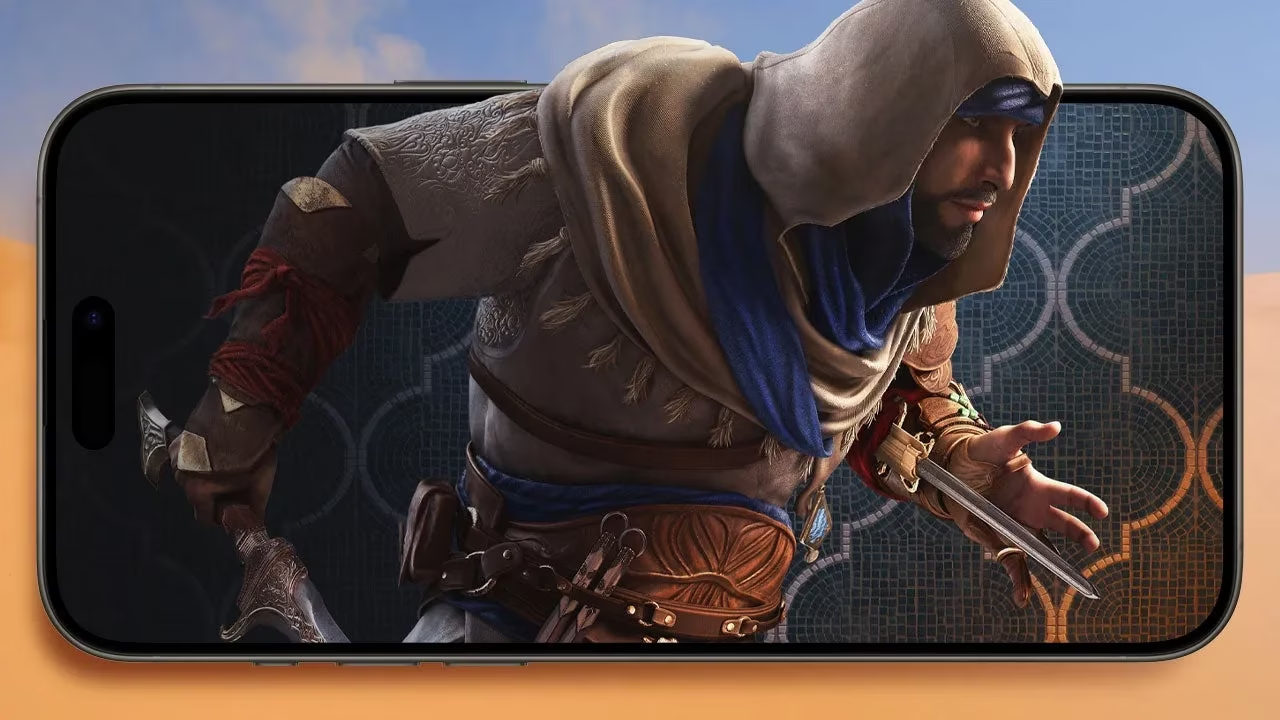
Gone are the days of watered-down "Pocket Editions" or simplified demakes. The new generation of mobile gaming, as demonstrated at Apple's event, involves running the complete, unaltered versions of major AAA titles. Take Assassin's Creed Mirage, for example. Ubisoft showed the full open-world adventure running flawlessly on an iPhone. This isn't a scaled-back version like Final Fantasy 15 Pocket Edition from years past. It's the entire game, with Ubisoft's online account system allowing seamless save transfers between console and mobile versions (though requiring a separate purchase for the mobile platform).
Capcom followed a similar path, showcasing Resident Evil 7 running natively on iPhone and iPad, in addition to Mac. Like Mirage, this is the complete horror experience, not a made-for-mobile adaptation. These titles join other full console ports already available, such as Death Stranding, creating a growing library that asks: Is the most powerful gaming device already in your pocket?
Performance and Visual Fidelity: How Do They Hold Up?
Naturally, one might wonder about compromises. During hands-on sessions, performance was largely impressive. While there were occasional framerate dips in Assassin's Creed Mirage, overall gameplay was described as "silky smooth." Graphically, these games shine on mobile displays. The smaller screen size of iPhones actually works in their favor—any potential loss in detail is masked by the high pixel density, making games like Resident Evil 7 look "mighty impressive." The technical achievement here cannot be overstated; we're talking about games that, just a few years ago, required dedicated gaming hardware.
The Hardware and Ecosystem Equation
Playing these immersive experiences does raise practical considerations. For many gamers, especially those accustomed to traditional controls, a phone controller like the Backbone becomes almost essential. While younger gamers raised on touchscreens might adapt, tactile buttons provide a significantly better experience for complex action and adventure games. This adds an extra cost (around $100 for premium controllers) to enter this new mobile console gaming space.
Apple's ecosystem plays a crucial role through its Universal Purchase system. Buy a game once, and you can play it on iPhone, iPad, Mac, and Apple Vision Pro (where supported). However, this doesn't extend to cross-platform purchases from PlayStation or Xbox. For older games like Resident Evil 7, buying a new full-priced copy for Apple devices can feel like a "bitter pill to swallow" for existing owners on other platforms.
Apple's Dual Strategy: Arcade and AAA Convergence
Apple seems to be executing a two-pronged strategy for gaming dominance:
-
Apple Arcade: The subscription service continues to thrive, offering curated, high-quality, ad-free games. It's home to innovative indie titles and major mobile hits like Hello Kitty Island Adventure and the upcoming Vampire Survivor+. This caters to the traditional mobile gaming audience.
-
AAA Game Ports: Simultaneously, Apple is aggressively courting the core gaming market with a steady stream of major console titles. This creates a bridge for gamers who want deeper, more advanced experiences on the devices they always carry.
This convergence suggests Apple has found a winning formula. But is it seamless? Not every game runs on every device. Titles like the upcoming Frostpunk 2 and Prince of Persia: The Lost Crown were only demonstrated on Mac at the event, though their eventual arrival on iPhone seems plausible.
The New Frontier and Lingering Questions
The move signifies a new frontier for mobile gaming. While devices like the Steam Deck and Nintendo Switch pioneered hybrid console gaming, Apple is pushing pure mobile devices into the AAA arena. This opens up incredible access for millions of iPhone and iPad owners worldwide, who suddenly have a pipeline of premium games arriving on hardware they already own.
Yet, questions remain for the future:
-
Will Apple secure day-and-date releases with other platforms, or will iPhone gamers always be playing catch-up?
-
How will the pricing model evolve for these full-scale games on mobile?
-
Can the mobile hardware keep pace with the demands of next-generation console titles?
One thing is clear: the old labels no longer fit. Mobile gaming is no longer just a distinct category—it's becoming a legitimate, high-fidelity destination for the biggest games in the world. The revolution, it seems, is already in your pocket.